
Fashion Textiles
Decorative grains, geometric motifs and branded surface effects.
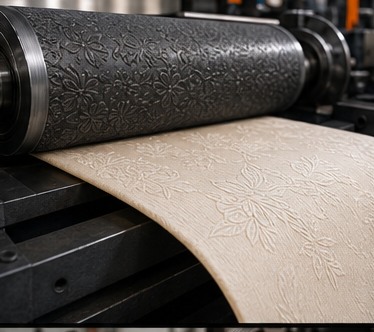
Textile emboss rollers add visual, tactile or functional patterns to woven fabric, coated textile and non-woven materials. Pattern geometry must account for softness, stretch, heat and web tension.
Request Technical Discussion +Textile emboss rollers add visual, tactile or functional patterns to woven fabric, coated textile and non-woven materials. Pattern geometry must account for softness, stretch, heat and web tension.
Each application has different material behavior, operating conditions and surface expectations. The roller specification is developed accordingly.
Decorative grains, geometric motifs and branded surface effects.
Texture and bonding patterns for hygiene, filtration and technical materials.
Pattern transfer for PU/PVC coated textile and synthetic leather products.
Pattern depth and edge profile are adjusted for textile compressibility and stretch.
CNC engraving supports repeatable motifs across long production lengths.
Roll specifications can accommodate heated embossing and coated fabrics.
Surface and geometry choices consider release, tension and wrinkle control.
Final dimensions and materials are confirmed against the approved drawing and operating data.
| Materials | Woven fabric, coated textile, non-woven and synthetic leather |
|---|---|
| Pattern styles | Fine geometric, grain, floral, branding and bonding patterns |
| Process inputs | Temperature, pressure, dwell time, line speed and tension |
| Roll pairing | Engraved steel with suitable counter roller or matched system |
| Inspection | Pattern repeat, edge quality, dimensions and surface finish |
We review the material, machine arrangement and performance target for this roller.
Roll geometry, surface specification and process parameters are defined for textile emboss rollers.
Machining, engraving or polishing is completed under dimensional process control.
The finished roller is checked, protected and prepared for domestic or export delivery.
Yes. The roller and engraving are engineered around the process temperature and fabric coating.
Pattern depth, pressure and temperature can be tuned to balance definition with hand feel.
Yes, subject to minimum feature size, repeat and the material's ability to reproduce detail.
Share the material, working width, roller drawing and desired surface result for a technical review.