
Upholstery Leather
Natural grains and durable textures for furniture and seating.
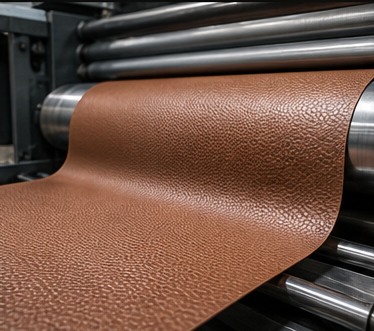
Artificial leather manufacturers rely on accurate grain reproduction, low-gloss control and consistent tactile feel. Roller texture must suit PU/PVC coatings, backing fabric and thermal embossing conditions.
Request Technical Discussion +Artificial leather manufacturers rely on accurate grain reproduction, low-gloss control and consistent tactile feel. Roller texture must suit PU/PVC coatings, backing fabric and thermal embossing conditions.
Each application has different material behavior, operating conditions and surface expectations. The roller specification is developed accordingly.
Natural grains and durable textures for furniture and seating.
Low-gloss grains for seat covers, door panels and interior skins.
Fine decorative textures for bags, shoes and accessories.
Digitized texture and controlled depth produce convincing leather-like surfaces.
Pattern edges are tuned for PU/PVC flow and fabric backing.
Accurate repeat geometry supports long runs and matching production lots.
Customer grains, artwork or physical references can be evaluated.
Final dimensions and materials are confirmed against the approved drawing and operating data.
| Materials | PU, PVC, coated textile and synthetic leather |
|---|---|
| Products | Upholstery, automotive trim, footwear, bags and fashion sheet |
| Pattern types | Leather grain, pebble, fine pore, geometric and custom |
| Process inputs | Coating type, temperature, pressure, speed and backing |
| Quality focus | Grain fidelity, repeat, gloss, release and edge definition |
We review the material, machine arrangement and performance target for this industry roller solution.
Roll geometry, surface specification and process parameters are defined for artificial leather & pu/pvc industries.
Machining, engraving or polishing is completed under dimensional process control.
The finished roller is checked, protected and prepared for domestic or export delivery.
A suitable leather sample can be digitized and adapted into a repeatable roller pattern.
Microtexture, engraving finish and process settings together influence final gloss.
It may need depth or edge adjustments because the two coatings respond differently.
Share the material, working width, roller drawing and desired surface result for a technical review.