
Embossed Wallpaper
Fabric, plaster, geometric and organic tactile effects.
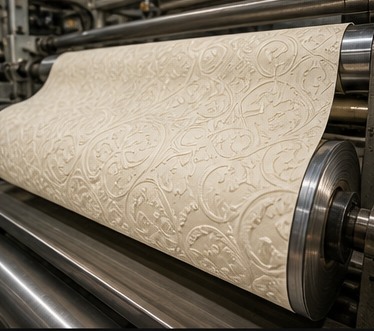
Wallpaper and decorative films use embossing to add depth, fabric effects, plaster textures and premium tactile detail that cannot be achieved by print alone.
Request Technical Discussion +Wallpaper and decorative films use embossing to add depth, fabric effects, plaster textures and premium tactile detail that cannot be achieved by print alone.
Each application has different material behavior, operating conditions and surface expectations. The roller specification is developed accordingly.
Fabric, plaster, geometric and organic tactile effects.
Texture for furniture wrap, interior film and laminates.
Custom motifs for hospitality, retail and residential interiors.
Embossing adds shadow and tactile relief to printed designs.
Accurate circumference supports continuous wallpaper pattern alignment.
Engraving can reproduce subtle textile, plaster and organic effects.
Depth and edge geometry are selected for paper, foam, vinyl or film constructions.
Final dimensions and materials are confirmed against the approved drawing and operating data.
| Products | Wallpaper, vinyl wallcovering, decorative film and laminate |
|---|---|
| Pattern styles | Textile, plaster, geometric, organic, stone and custom |
| Critical inputs | Repeat length, material build, foam layer, speed and temperature |
| Registration | Random texture or synchronized print-to-emboss requirement |
| Quality focus | Repeat, edge detail, tactile depth and web integrity |
We review the material, machine arrangement and performance target for this industry roller solution.
Roll geometry, surface specification and process parameters are defined for wallpaper & decorative surfaces.
Machining, engraving or polishing is completed under dimensional process control.
The finished roller is checked, protected and prepared for domestic or export delivery.
It may be possible with compatible repeat lengths and synchronized converting equipment.
Fabric, plaster, organic, geometric and stone effects are commonly suitable.
Yes, but heat, compression and recovery behavior must be considered.
Share the material, working width, roller drawing and desired surface result for a technical review.