
Privacy Glass
Translucent patterns for doors, partitions and windows.
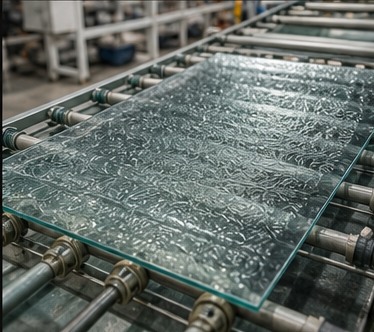
Decorative glass lines require thermally stable rollers with uniform engraving across wide working faces. The pattern becomes part of the architectural and optical character of the final glass.
Request Technical Discussion +Decorative glass lines require thermally stable rollers with uniform engraving across wide working faces. The pattern becomes part of the architectural and optical character of the final glass.
Each application has different material behavior, operating conditions and surface expectations. The roller specification is developed accordingly.
Translucent patterns for doors, partitions and windows.
Decorative surfaces for furniture, shower panels and wall features.
Large-format textures for facades and commercial interiors.
Consistent engraving across the face supports even patterning on large glass widths.
Roll construction accounts for continuous high-temperature operating conditions.
Pattern shape can influence privacy, light diffusion and visual depth.
Geometric, organic and customer-specific patterns can be evaluated.
Final dimensions and materials are confirmed against the approved drawing and operating data.
| Glass types | Decorative, architectural, privacy and patterned glass |
|---|---|
| Pattern effects | Light diffusion, privacy, visual texture and decoration |
| Process data | Glass temperature, width, thickness, speed and cooling conditions |
| Engineering focus | Thermal expansion, face profile, repeat and journal stability |
| Inspection | Pattern uniformity, depth, dimensions and working-face consistency |
We review the material, machine arrangement and performance target for this industry roller solution.
Roll geometry, surface specification and process parameters are defined for glass & decorative glass industries.
Machining, engraving or polishing is completed under dimensional process control.
The finished roller is checked, protected and prepared for domestic or export delivery.
Yes, from artwork, a sample or an approved repeat design.
Pattern geometry scatters transmitted light and reduces direct visibility.
Temperature changes can affect roll dimensions, face profile and pattern consistency.
Share the material, working width, roller drawing and desired surface result for a technical review.