
Tissue & Towel
Patterns that support bulk, absorbency and tactile softness.
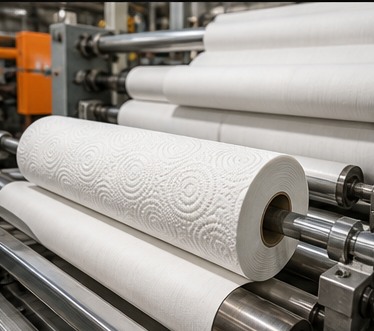
Paper and tissue embossing improves appearance, bulk, softness, absorbency and ply bonding. Pattern design must balance visual quality with web strength and converting speed.
Request Technical Discussion +Paper and tissue embossing improves appearance, bulk, softness, absorbency and ply bonding. Pattern design must balance visual quality with web strength and converting speed.
Each application has different material behavior, operating conditions and surface expectations. The roller specification is developed accordingly.
Patterns that support bulk, absorbency and tactile softness.
Decorative borders, branding and ply-bonding patterns.
Texture for packaging, decorative papers and specialty products.
Rounded pattern geometry helps reduce cutting or weakening of delicate tissue.
Pattern area and depth can support absorbency, bulk and ply bonding.
Accurate circumference and repeat reduce pattern drift on converting lines.
Logos, borders and decorative motifs can be integrated where feasible.
Final dimensions and materials are confirmed against the approved drawing and operating data.
| Products | Tissue, kitchen towel, napkin, paper, board and hygiene web |
|---|---|
| Pattern goals | Bulk, softness, absorbency, bonding, decoration or branding |
| Critical inputs | Basis weight, ply count, moisture, speed and pressure |
| Roll systems | Steel-to-rubber, steel-to-steel or application-specific pairing |
| Quality focus | Web integrity, repeat, depth, cleanliness and edge profile |
We review the material, machine arrangement and performance target for this industry roller solution.
Roll geometry, surface specification and process parameters are defined for paper & tissue products.
Machining, engraving or polishing is completed under dimensional process control.
The finished roller is checked, protected and prepared for domestic or export delivery.
Yes. Suitable patterns can increase bulk and create channels or pockets that support liquid uptake.
Yes, subject to repeat dimensions, feature size and web strength.
Tissue is weaker and more compressible, so edges, area coverage and depth require gentler design.
Share the material, working width, roller drawing and desired surface result for a technical review.